What does the VALORANT Champions Shanghai group stage reveal about the 2026 world title race?
Want articles like this for your own video to promote it on YouTube and Google? Order them through the Telegram bot @sat_sit_bot. Articles with your video embedded are written and posted by the bot itself — on popular topical sites (no ads). Your first 50 articles are free.
· based on the channel VALORANT Champions Tour
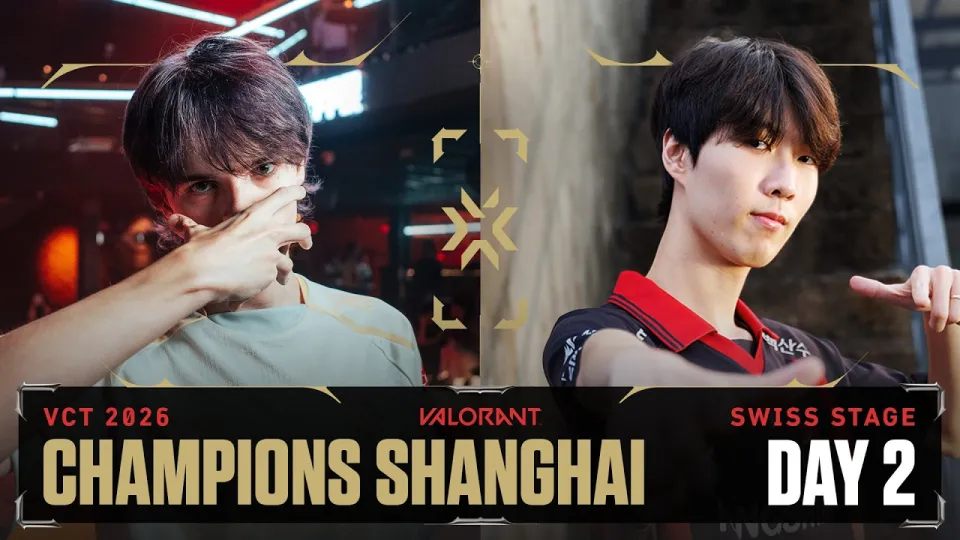
VALORANT Champions Shanghai is the 2026 world championship of the VALORANT Champions Tour, and its group stage decides which of the 16 qualified teams advance toward the trophy. The event runs from September 24 to October 18 in Shanghai, with representatives from Americas, CN, EMEA and Pacific. Day 2 of the group stage, published by the VALORANT Champions Tour channel on September 25, 2026, gives the clearest early read on how the bracket is shaping up, and the official VALORANT Esports X account (@valorantesports) remains the fastest place to get schedules, results and broadcast links.
What is VALORANT Champions Shanghai and why the group stage matters
VALORANT Champions is the season-ending world championship, the tournament every regional league and Masters event feeds into. Shanghai hosts the 2026 edition, and the group stage is the first cut: 16 teams arrive, but only a subset survive into the playoff bracket. That makes every group-stage map a direct qualification lever rather than a warm-up.
The stakes are structural, not just cosmetic. A team that drops early maps can still advance, but it usually inherits a harder playoff path and less preparation time between series. Conversely, a clean group stage lets a roster protect its map pool and hide strategies for the bracket. In a field this compressed, the difference between a 2-0 and a 2-1 group record is often the difference between facing a regional champion or a fellow qualifier in the first playoff round.
The 2026 season adds extra weight to the event. According to the official event description, the year saw new contenders emerge, expectations get broken, and two Masters events crown new champions. Shanghai is where those threads converge: familiar names, new challengers and a younger generation of players all competing for the biggest trophy of the year.
How the group stage format shapes Day 2 outcomes
The group stage is built to reward consistency across maps, not single-map upsets. Teams are sorted into groups and play through a round-robin or double-elimination structure depending on the bracket, with advancement tied to series wins. Each match is typically a best-of-three, so map preparation and veto discipline carry as much weight as raw aim.
Key mechanics to track:
- Series wins are the primary currency; map differential is the tiebreaker that decides tight groups.
- Best-of-three format means a single lost map is recoverable, but two lost maps end the series.
- Map veto happens before each series, so teams that hide a strong map in the group stage can deploy it in the playoffs.
- Side selection and pistol rounds disproportionately swing close maps, which is why early-round execution matters so much on days like Day 2.
Day 2 specifically matters because it is the first point where teams have real information about their group opponents. A squad that lost on Day 1 faces a must-win scenario, while an undefeated team can experiment with comfort picks. That asymmetry produces the fast, lopsided series that viewers often describe as a "speedrun day" — a slate where matches end quicker than expected because one side is already playing from behind in the standings.
Regional slots and the CN debate around the 16-team field
The 16-team field is split across four regions: Americas, CN, EMEA and Pacific. China's CN region holds four slots, which is one of the most debated structural points in the community. The official description confirms the regional split, but it does not assign slot counts; those come from the VCT's published qualification structure for the season.
The debate is simple: more slots for one region means fewer slots for another, and Pacific in particular has a deep pool of teams that regularly push deep at international events. Viewers argue that merging CN into Pacific, or reducing CN's direct slots in favor of more Pacific qualifiers, would raise the average competitive level of the group stage. The counter-argument is commercial and developmental: a dedicated CN region grows the domestic scene, builds local viewership, and gives Chinese teams a stable pathway to international competition instead of forcing them through a merged qualifier.
Both positions have merit, and the group stage is where the argument gets tested. If CN teams advance and win series, the slot allocation looks justified. If they exit early, the criticism returns. Day 2 is a small but real data point in that ongoing conversation.
Why some group-stage matches look lopsided
Group stages at international events frequently produce mismatches, and Shanghai is no exception. The gap comes from three sources: seeding, map pools and preparation time. Teams that qualified through a strong regional playoff arrive with sharper defaults; teams that scraped in often rely on one comfort map that gets banned out.
That dynamic explains why some series feel like a top-rank team against a much lower-ranked one. It is not that the losing team is unskilled — it is that the group stage compresses very different regional metas into a single bracket. A team that dominates its home league with a specific composition can look lost when that composition is banned or countered by an opponent from another region.
There is also a broadcast factor. International events show in-game comms and team audio, and those clips can make a struggling team look worse than it is. A single chaotic round, isolated and replayed, does not represent a team's overall level. The fair read is the series score and the map pool, not one clipped round.
How to watch the group stage and follow results
The group stage is broadcast live on the official VALORANT channels, with VODs uploaded to the VALORANT Champions Tour YouTube channel. The event description lists Twitch, YouTube, Kick and the regional social accounts as the primary distribution points.
To follow the tournament efficiently:
- Watch the live broadcast on Twitch at https://www.twitch.tv/valorant for the full schedule.
- Use the VALORANT Champions Tour YouTube channel for VODs and day-by-day recaps.
- Check @valorantesports on X for standings, bracket updates and schedule changes.
- Follow the official Instagram at https://www.instagram.com/valorantesports/ and Facebook at https://www.facebook.com/ValorantEsports/ for clips and photos.
- Use the TikTok account at https://www.tiktok.com/@valorantesports for short-form highlights.
For viewers who want to avoid spoilers, community-run spoiler-free timestamps are common in the comments of each VOD, which lets you watch a full day of matches without seeing results first.
Common questions from the group stage audience
A few recurring themes show up whenever a Champions group stage airs. One is pacing: some days finish far faster than expected because the bracket produces short series, which surprises viewers who planned for a long watch session. Another is translation: international broadcasts translate player interviews, and the added time can feel slow compared to the original answer length.
A third theme is competitive legitimacy. When one region's teams lose early, viewers question whether that region deserves its slot count. That is a fair debate, but it is worth separating two things: the strength of a region's top teams and the value of giving a region a development pathway. A region can be weak in a given year and still justify slots for long-term growth.
Finally, there is the mobile-versus-PC question. China's early access to VALORANT Mobile is sometimes cited as evidence that the region's future is on mobile rather than PC. That is speculation, not a confirmed competitive conclusion. The PC scene and the mobile scene are separate ecosystems with separate talent pipelines, and success in one does not predict the other.
Useful links
- Official VALORANT Esports X account: https://x.com/valorantesports
- Official Facebook: https://www.facebook.com/ValorantEsports/
- Official Instagram: https://www.instagram.com/valorantesports/
- Official TikTok: https://www.tiktok.com/@valorantesports
- Official Twitch channel: https://www.twitch.tv/valorant
The bottom line on VALORANT Champions Shanghai
The group stage is where the 2026 world title race becomes concrete: 16 teams, four regions and a bracket that punishes slow starts. Day 2 showed how quickly a group can swing, and it reinforced that map preparation and veto discipline matter as much as individual skill. The CN slot debate will keep running as long as results are mixed, but the tournament itself is the answer — teams that advance prove their region's depth on the server, not in comment sections. For the full picture, follow the VALORANT Champions Tour channel, which produced this Day 2 broadcast, and keep @valorantesports open for live standings and bracket updates.
Key takeaways
- VALORANT Champions Shanghai 2026 runs from September 24 to October 18 and features 16 teams from Americas, CN, EMEA and Pacific competing for the world title.
- The group stage opener, Day 2, was streamed by the VALORANT Champions Tour channel and is the source for this breakdown.
- China (CN) fields four slots in the 16-team field, a structural detail that drew heavy audience debate in the comments.
- The event is the culmination of a season where new contenders broke expectations and two Masters titles went to new champions.
- Official updates and community reaction are aggregated on the VALORANT Esports X account at https://x.com/valorantesports.
Questions & answers
How many teams play in the VALORANT Champions Shanghai group stage?
Sixteen teams qualify for the event, split across Americas, CN, EMEA and Pacific. They are drawn into groups and play through the group stage to determine which teams advance to the playoff bracket. The exact group composition and seeding come from the VCT's published qualification structure for the season.
Why do some group-stage days finish so much faster than others?
Group-stage matches are best-of-three, and when one team is clearly stronger or better prepared, series end in two maps instead of three. Seeding also plays a role: a high seed facing a lower seed often produces a short series. That is why a full day can wrap up earlier than viewers expect.
Does China deserve four slots at international VALORANT events?
It is a genuine debate with two valid sides. More CN slots grow the domestic scene and give Chinese teams a stable international pathway, but they reduce slots for other regions like Pacific, which has a deep talent pool. The group stage results are the practical test of whether the allocation is justified in a given year.
Where can I watch VALORANT Champions Shanghai and avoid spoilers?
The event airs on the official VALORANT Twitch and YouTube channels, with VODs on the VALORANT Champions Tour YouTube channel. Community spoiler-free timestamps are often posted in the comments of each VOD, which lets you watch a full day of matches without seeing results first.
Source: VALORANT Champions Shanghai — Group Stage — Day 2 · Markdown version